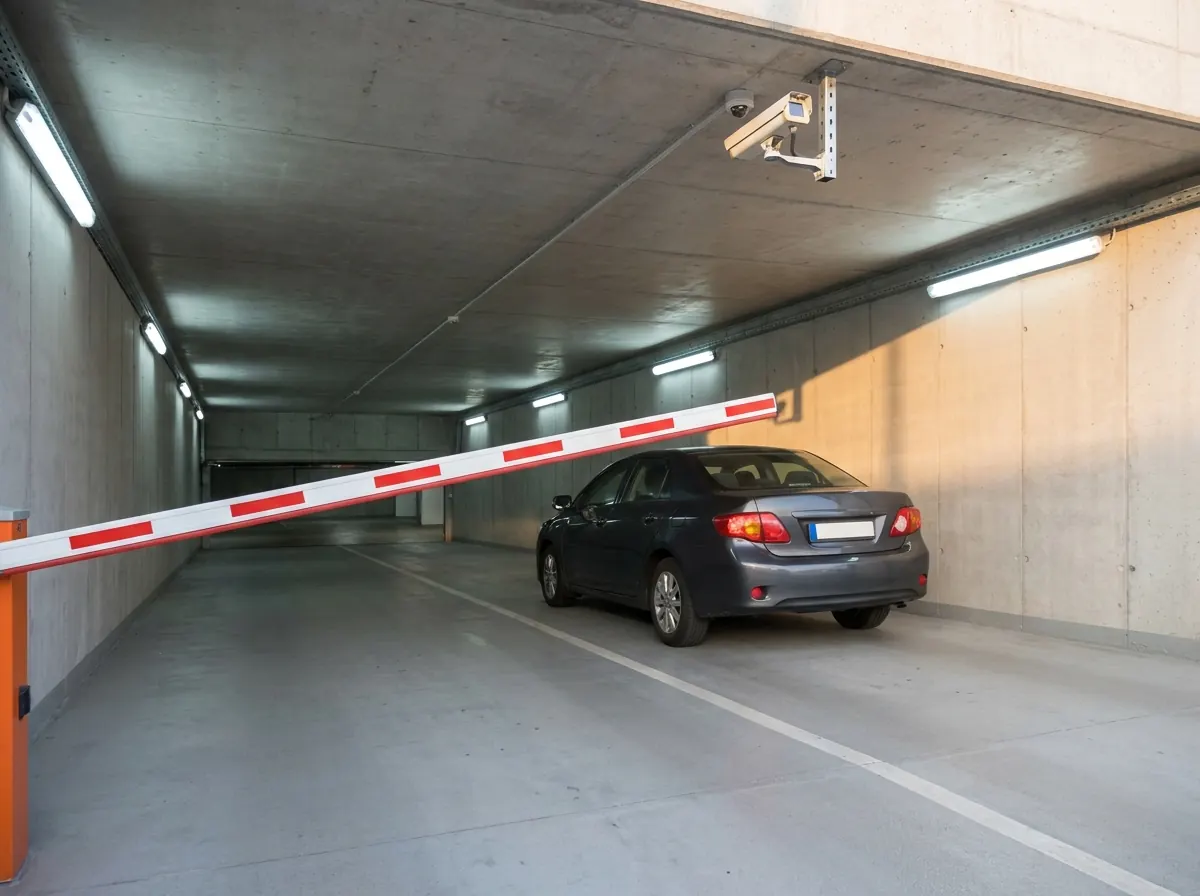
Home / Plate recognition for parking and gates
LPR · ParkingPlate recognition for parking and gates.
Let known cars through without a remote or a ticket, keep a searchable log of every vehicle, and flag the ones you do not know.
Free LPR software · one camera free for life · plate recognition included · about 100 MB
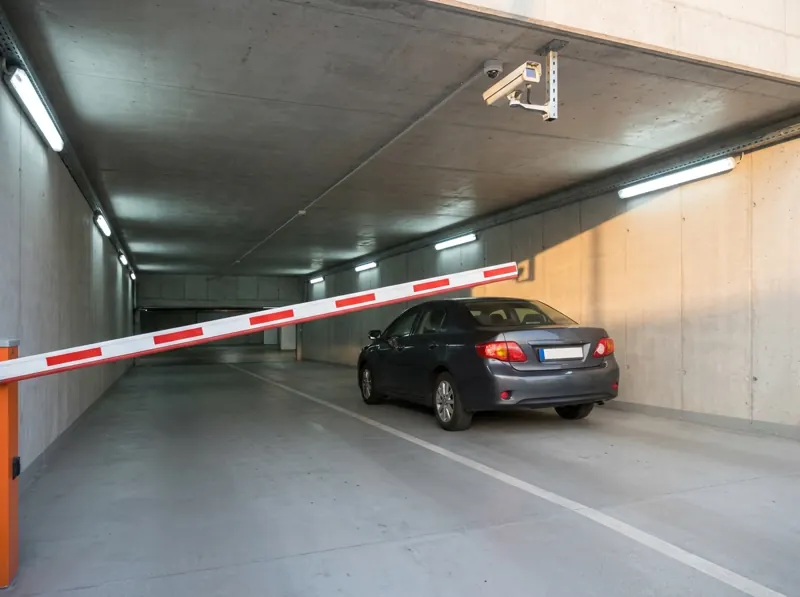
The barrier that knows your tenants.
Plate recognition replaces remotes, key cards and paper tickets with the one thing every car already carries.
- Open for known plates — residents, staff, tenants.
- Log every visitor with time, lane and picture.
- Alert on unknown or no-plate vehicles, or after-hours arrivals.
- Search history — every visit by a plate, instantly.
From camera to barrier.
Camera at the lane
Positioned where cars stop at the barrier: low, close, straight-on.
Plate read
The software reads the plate as the car stops or rolls up.
List check
The plate is checked against your allowed list in milliseconds.
Barrier opens
A camera output or relay triggers the barrier or gate controller.
VISEC's access control drives the barrier through ONVIF and Axis camera inputs and outputs — no separate controller for simple setups. Cameras need physical I/O ports for this.
What LPR parking usually costs — and what it can.
| Specialist parking LPR | Software on your cameras | |
|---|---|---|
| Cameras | Proprietary LPR units | Existing ONVIF IP cameras |
| Pricing | Often per lane, per month | VISEC: free on 1 camera; one-time licenses for more |
| Video recording | Separate system | Same software |
| Data location | Often vendor cloud | Your own PC |
Parking LPR: quick answers.
How does license plate recognition open a parking barrier?
The camera reads the plate, the software checks it against an allowed list, and a relay or camera output signals the barrier to open — usually within a second.
What happens with visitors?
Their plate is logged with a picture. You can alert staff, open on intercom, or add temporary plates to the list.
Can I try parking LPR for free?
Yes. VISEC's free license includes plate recognition and access control on one camera — enough for one lane.